

IT Web
Il y a 3 jours
UCT student joins global AI, open education conversation
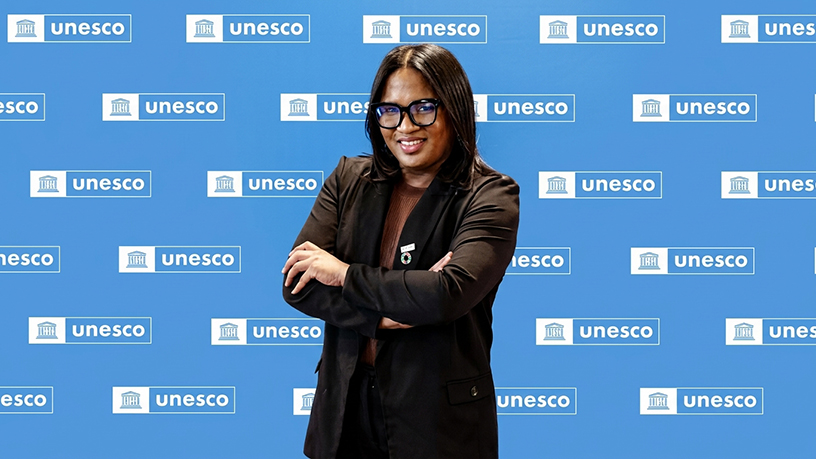
UCT post-graduate student Nico Pampier is contributing to international discussions on AI, open education and the future of higher education through her work with a UNESCO network.
UCT student joins global AI, open education conversation
UCT student joins global AI, open education conversation
Nico Pampier, a University of Cape Town student, joins the conversation about AI and open education. (Picture: Supplied)
University of Cape Town (UCT) post-graduate student Nico Pampier, who is studying educational technology, is working with the United Nations Educational, Scientific and Cultural Organisation (UNESCO) to help shape international conversations about AI, open education and the future of higher education.
Pampier is a student co-ordinator in an international fellowship linked to the UNESCO UNITWIN Network on Open Education, which brings together six partner universities with UNESCO chairs working on open education and AI.
The fellowship provides a platform for students to contribute to discussions on AI, assessment, education policy and the changing role of universities in society.
AI adoption exposes higher education policy gaps
Industry, academia partner to drive AI skills pipeline
She represents UCT under the leadership of Associate Professor Glenda Cox, chair of Open Education for Social Justice.
Pampier joined the fellowship on Cox's recommendation, having previously worked with her as a research assistant on the Digital Open Textbooks for Development project, an institutional project housed within UCT’s Centre for Innovation in Teaching and Learning.
As part of her role, Pampier convenes monthly engagements with 26 student fellows from SA, Brazil, Mexico, Morocco, Tunisia and Uruguay.
For Pampier, the work reflects a growing interest in how technology can expand access to education while ensuring students and communities remain at the centre of decisions about the future of higher education.
“I believe it is important that we do not forget who education is supposed to serve and what it is meant to create,” she said. “Students need to be part of the conversations where decisions about AI, assessment and policy are being discussed.”
Pampier is focused on the growing body of research into the relationship between students and AI. While studies point to potential benefits such as increased productivity and academic support, they also raise questions about students’ reliance on AI and possible social and emotional dependencies.
She believes these complexities make it important for universities to engage students directly as AI continues to reshape education.
“AI will be with us, and technology will continue to transform how we engage with higher education institutions and how communities respond to digital transformation,” she said.
“Universities need to think about the skills students need in this changing environment, but also about how communities can participate in and benefit from that transformation.”
In 2024, Pampier participated in UNESCO’s Transforming Knowledge for Africa’s Future forum in Addis Ababa, advocating for African indigenous knowledge and greater student involvement.
In 2025 and 2026, she engaged with UNESCO forums on digital learning, open education and AI skills, contributing to discussions on the future of higher education.
Her message to other young people is that there is no predetermined path to success.
“There is no blueprint,” she said. “But when we educate ourselves, the remarkable knowledge we gain and the control over our own futures becomes the real reward.
“We are not simply recipients of education,” she said. “We are researchers, innovators, contributors and future leaders who have a role to play in shaping what education becomes.”
Is your school network safe? We provide specialized, high-security solutions to protect academic institutions against rising cyber threats
In a connected world, networking equals opportunity — when it’s secure, it’s powerful.
Policy & Procedure Management – Better Governance through efficient group-wise policy management- Governance Platform | msg compliance
Publié le 17 septembre 2026
Source originale : IT Web