
IT Web
Il y a 10 heures
Is your GRC system helping you manage risk, or just recording it?
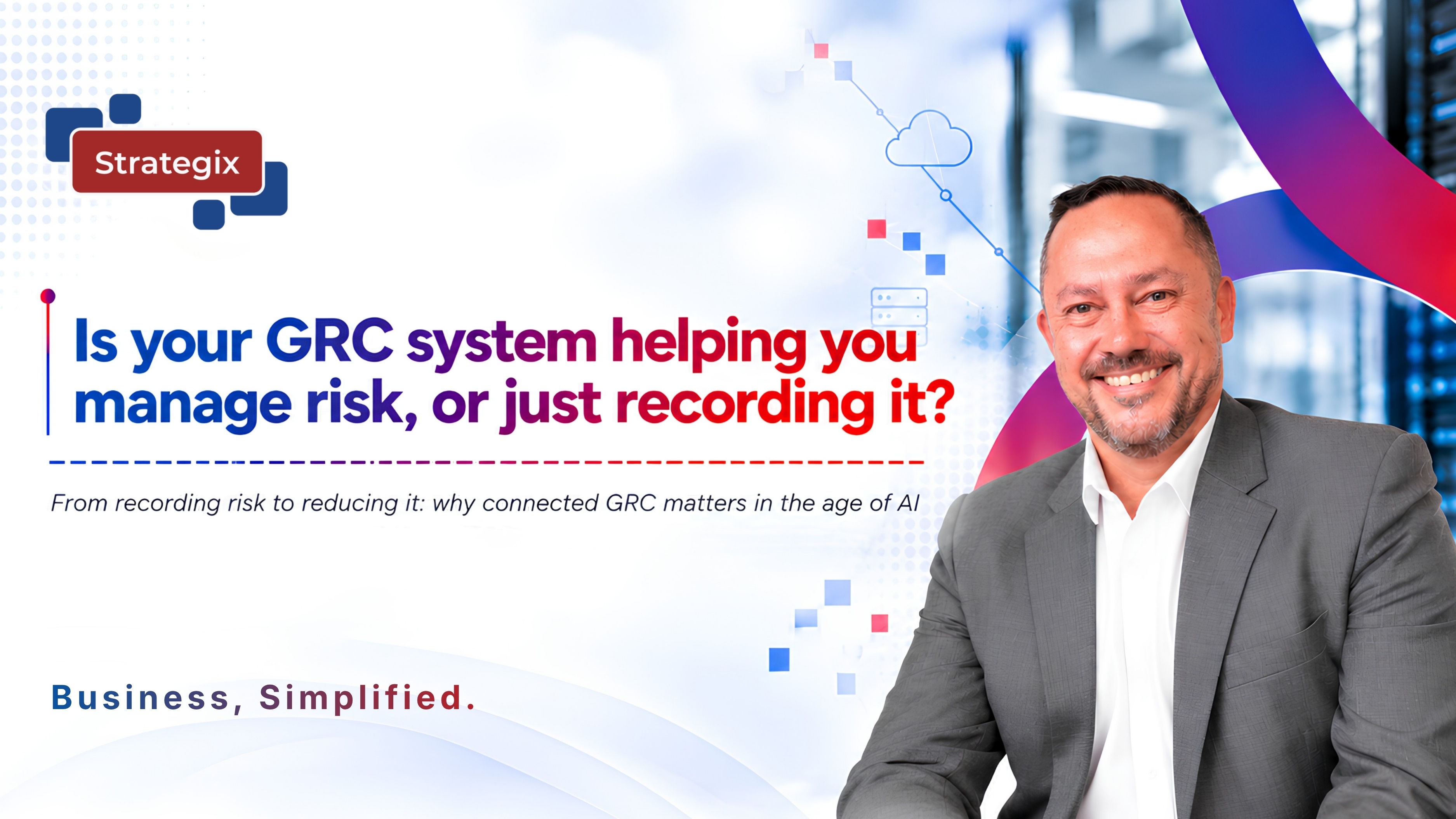
Effective GRC should make it easier to move from information to a defensible decision, says Deneys Minne, chief revenue officer at XGRC Software by Strategix.
Is your GRC system helping you manage risk, or just recording it?
Is your GRC system helping you manage risk, or just recording it?
By Deneys Minne, Chief Revenue Officer, XGRC Software by Strategix
Deneys Minne, Chief Revenue Officer, XGRC Software by Strategix.
Ask a board member where the organisation's biggest risks sit, and you'll usually get a confident answer. Ask what changed because those risks were identified, and the answer is often less clear.
Most organisations I work with are not short of governance data. They have risk registers, audit findings, incident logs, compliance checklists, ESG reports and corrective actions. What they often lack is a connected view that shows whether the risk itself has changed.
Working with risk, compliance, SHEQ and ESG teams, I often see the same risk viewed from different parts of the business. A risk can look well managed in one meeting because the action is closed, while another forum is still dealing with the consequence. It has made me sceptical of systems that record activity well but cannot show whether the risk has changed.
Over the past decade, GRC has become very good at documentation.
But recording activity is not the same as managing risk.
A corrective action can be marked complete without anyone checking whether it solved the problem. A control can be marked effective because evidence exists, even though the underlying exposure has increased. A board dashboard can show green because every field has been completed. That creates false comfort.
A single incident on a production line may point to a failed control, an overdue training requirement, a compliance breach and a reputational exposure. If those links sit in different systems, the incident is closed while the wider problem remains. The organisation has completed the process, but has it reduced the risk?
That is what I call the recording trap. The system faithfully records what happened. The harder question is whether it helps anyone decide what happens next.
Your SHEQ data sits apart from enterprise risk, so the operational and board views of the same risk drift apart.
Your regulatory changes arrive as documents, not actions.
Your users avoid the system. Poor adoption leads to poor data, and poor data creates false confidence.
You cannot say with confidence what AI your business is using, what it is doing or who owns the risk.
The last point is becoming one of the clearest tests of whether a governance model actually works.
AI is exposing weaknesses that already existed
AI did not create the governance problem. It exposed it.
Your teams are already using AI, whether it arrived through procurement, through a SaaS vendor switching on a new capability, or through an employee saving themselves a few hours.
Suppose an AI chatbot is approved to answer customer queries. A few months later, the vendor adds a capability that lets it initiate refunds. Nobody bought a new system and nobody went through another procurement process, but the risk has changed. The record still says “approved”.
So what exactly was approved? The original use case or the current one?
That is where static governance fails. The risk changed because the system changed, and good governance should recognise that change and trigger another decision.
Regulation is moving the same way: the EU AI Act, POPIA and ISO/IEC 42001 all expect AI to be understood, governed and overseen, not just listed.
In practice, I keep coming back to three questions:
What has actually been approved? Not just the system name. Its intended purpose, permitted use, relevant risks and the reasoning behind the decision.
What has changed since approval? A new model, a new data source or a new capability can materially alter the risk profile.
Who is watching it? Someone needs the authority and information to intervene, not just a name on a record.
AI governance is not a separate discipline. It is GRC applied to a new and fast-moving class of risk. Buying another standalone tool simply recreates the fragmentation we already know does not work.
Effective GRC should make it easier to move from information to a defensible decision. That might mean strengthening a control, changing a process or consciously accepting the risk within agreed limits. What matters is that the reasoning is visible, ownership is clear and the decision is reconsidered when circumstances change.
This is the real test of any integrated platform: a risk should connect to its controls, and those controls to evidence. Weak evidence should trigger review, review should lead to an owned decision, and someone should check whether it worked. Without that, you have a beautifully integrated filing cabinet.
Software cannot decide what level of risk a business should accept. It cannot create accountability where leadership does not demand it. What it can do is make gaps and changes in exposure visible enough that someone has to act.
This is the thinking behind the latest update of XGRC (v5). The aim is not just to bring GRC, SHEQ and ESG into one platform, but to connect the information that supports a decision.
One connected foundation. SHEQX (SHEQ), ENVIRX (environmental and carbon), ERM (enterprise risk) and MSX (management systems) share one foundation, so an incident, emissions result or audit finding can inform the related risks and controls.
A refreshed user experience and faster performance. A decision chain is only visible if people use the system that holds it. Easier, quicker use means better adoption, better data and less time spent assembling reports.
MAIA. Supports compliance summaries and regulatory-change analysis, helping teams see sooner what needs attention without replacing the person who decides.
XGRC AI governance. AI is governed like any other material risk, so you can show what was approved, what has changed and who is accountable.
At your next risk review, pick one material risk and follow it through. Then ask: what changed because we identified this risk?
Do the same with an AI system. Can you show what was approved, what has changed and who decides whether that matters?
The test of good governance is not whether the record is complete. It is whether the organisation can show that the risk informed a decision, that someone acted on it and that the outcome was checked.
If you want to see how XGRC v5 connects risk, compliance, SHEQ, ESG and AI governance in practice, book a demo at [email protected] or visit xgrcsoftware.com to learn more.
Publié le 20 octobre 2026
Source originale : IT Web